Learning
HomeLearning
Learning the CDE Way
CDE Key Points
Montessori Curriculum
Primary Years Programme
Learning the CDE Way
At Casa D’éducation, learning is a joyful journey that blends academic rigor with emotional, social, and creative development. Our holistic approach focuses on nurturing the whole child, equipping them with the tools they need to thrive as compassionate and capable global citizens.
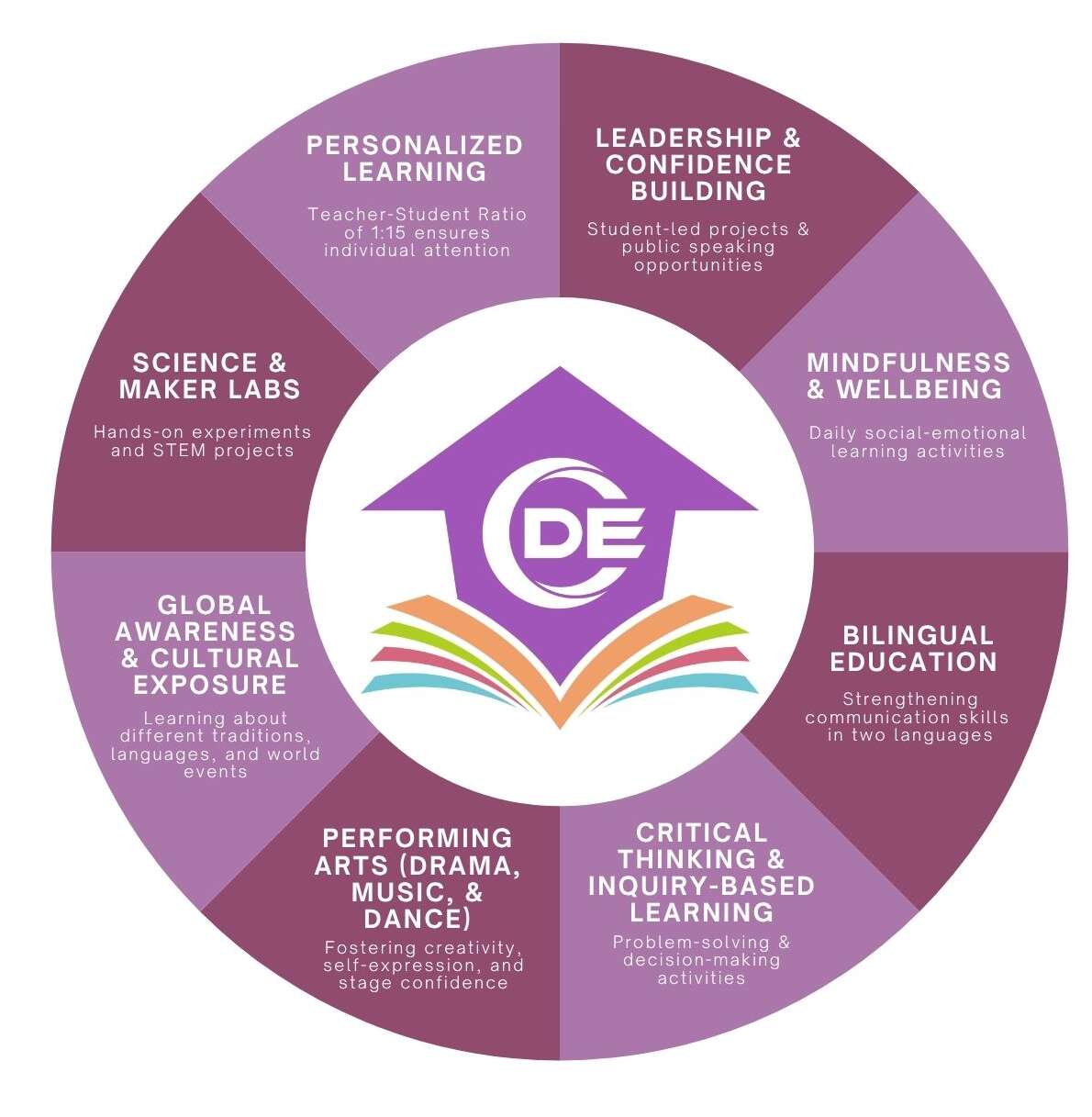
The “CDE Way” is built around eight core pillars, each designed to foster the development of key skills, mindsets, and values in every learner:
CDE Key Points
Personalized Learning
With a teacher-student ratio of 1:15, we ensure that every child receives the attention and support they need to flourish at their own pace.
Leadership & Confidence Building
Through student-led projects and public speaking opportunities, children develop the confidence to express their ideas and take initiative.
Critical Thinking & Inquiry-Based Learning
We encourage curiosity and problem-solving through hands-on, inquiry-driven activities that make learning deeply meaningful.
Bilingual Education
Our bilingual environment strengthens communication skills and promotes cultural appreciation in two languages.
Mindfulness & Wellbeing
Daily social-emotional learning practices help students build emotional resilience, focus, and empathy.
Performing Arts (Drama, Music, & Dance)
Creative expression is celebrated through stage performances that foster self-confidence, imagination, and teamwork.
Global Awareness & Cultural Exposure
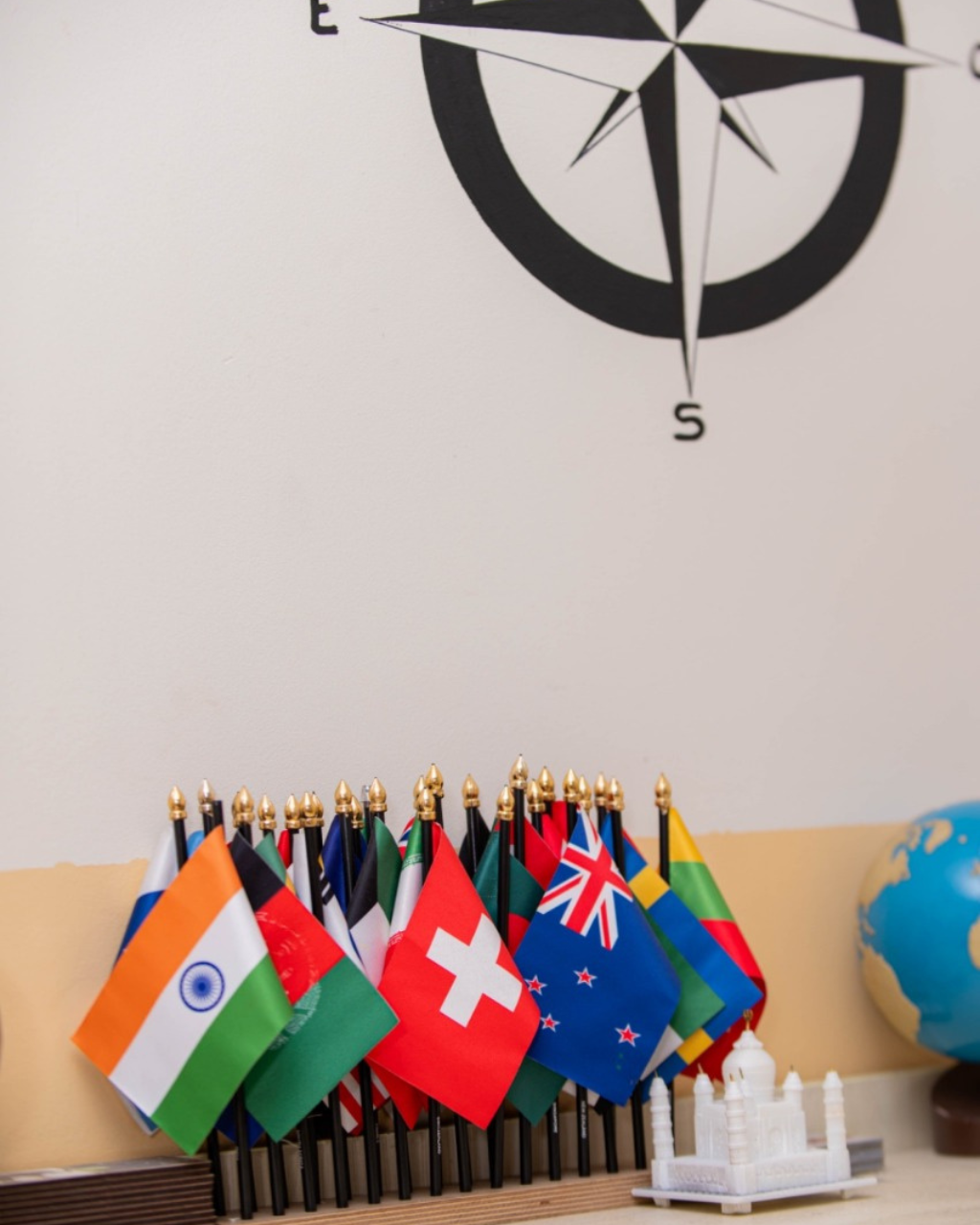
Students explore global traditions, current events, and diverse perspectives to become informed and open-minded world citizens.
Science & Maker Labs
Our STEM labs provide opportunities for exploration, experimentation, and discovery through real-world projects.
These pillars reflect our belief that education must prepare students not only for academic success but also for life.
Montessori Curriculum
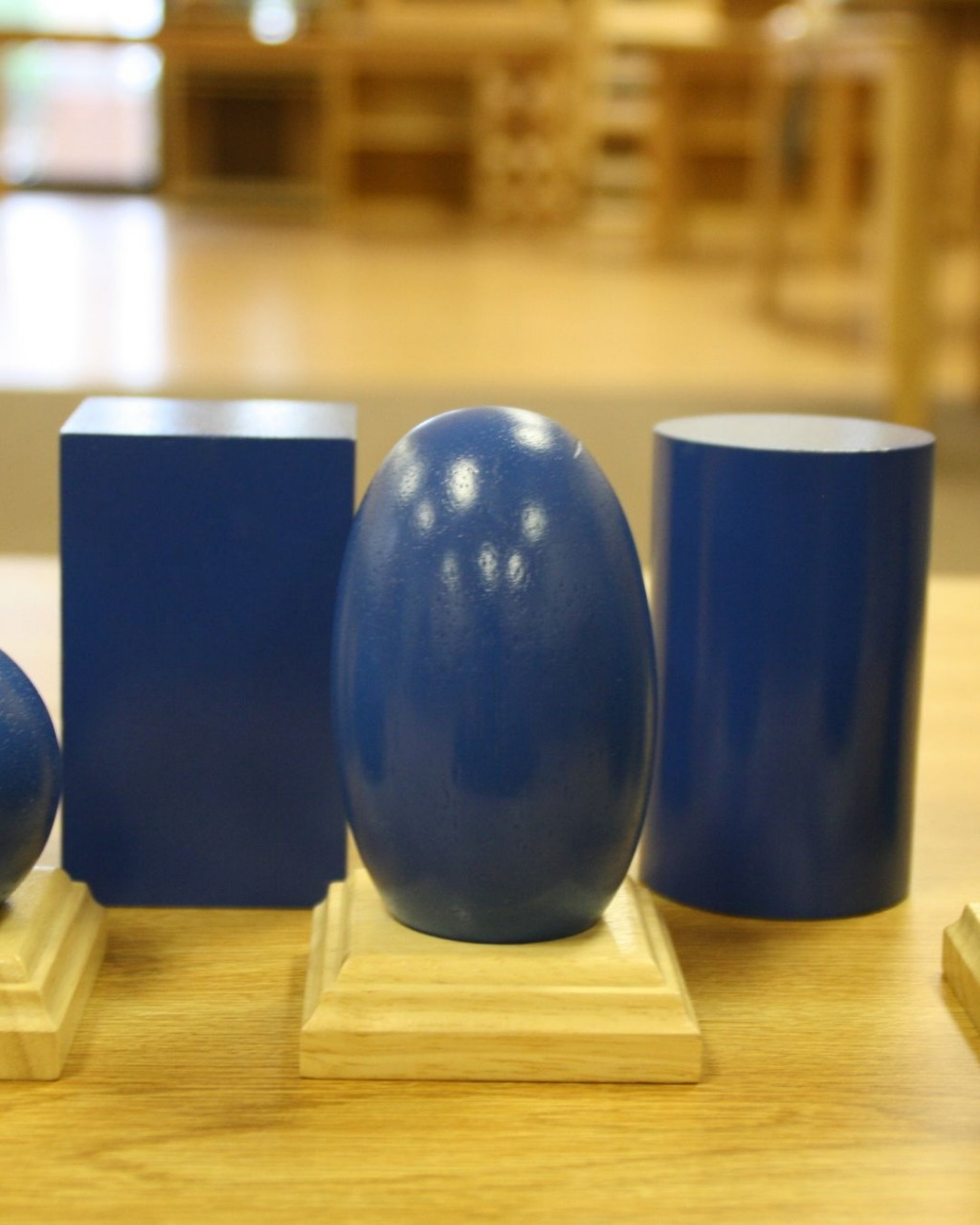
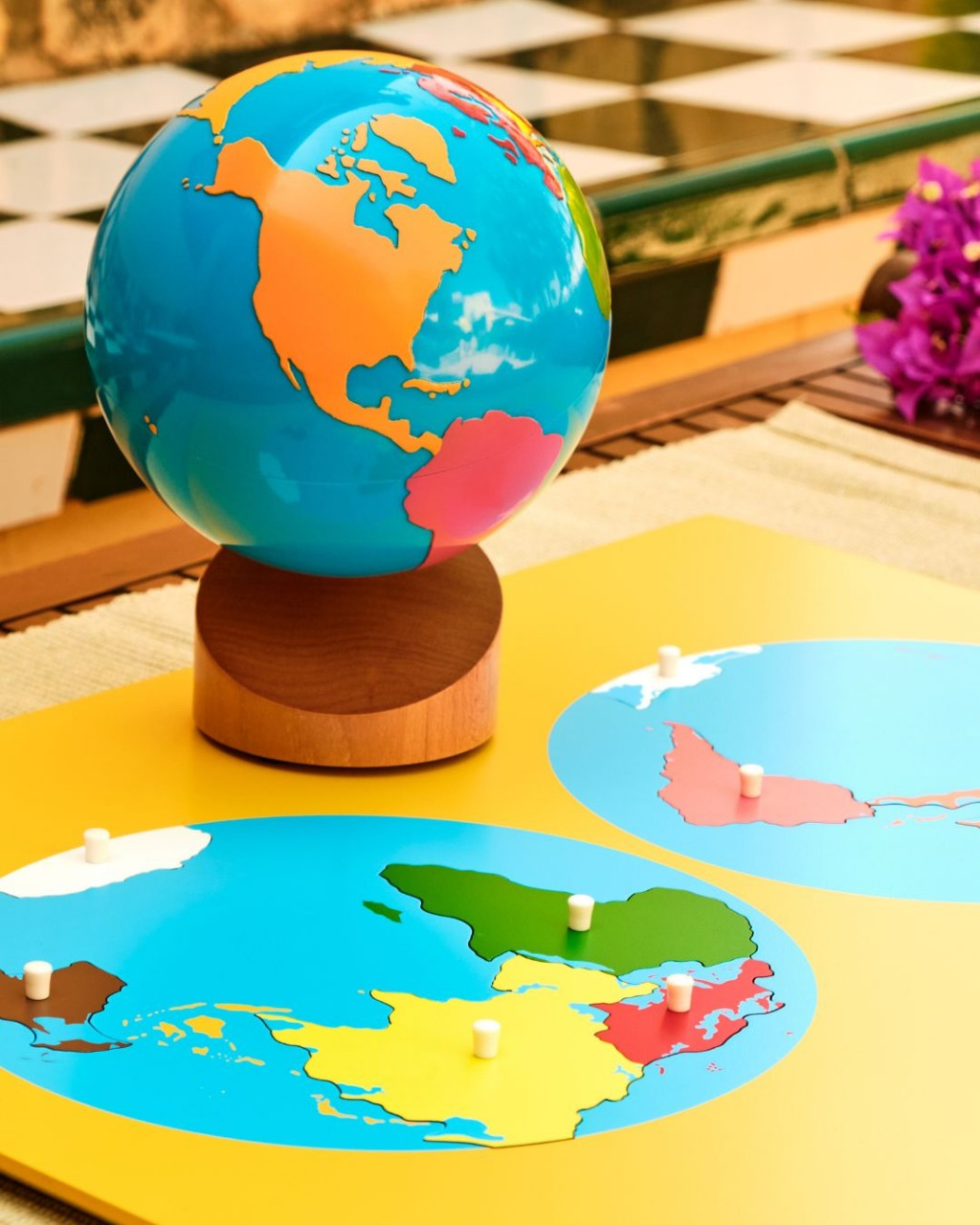
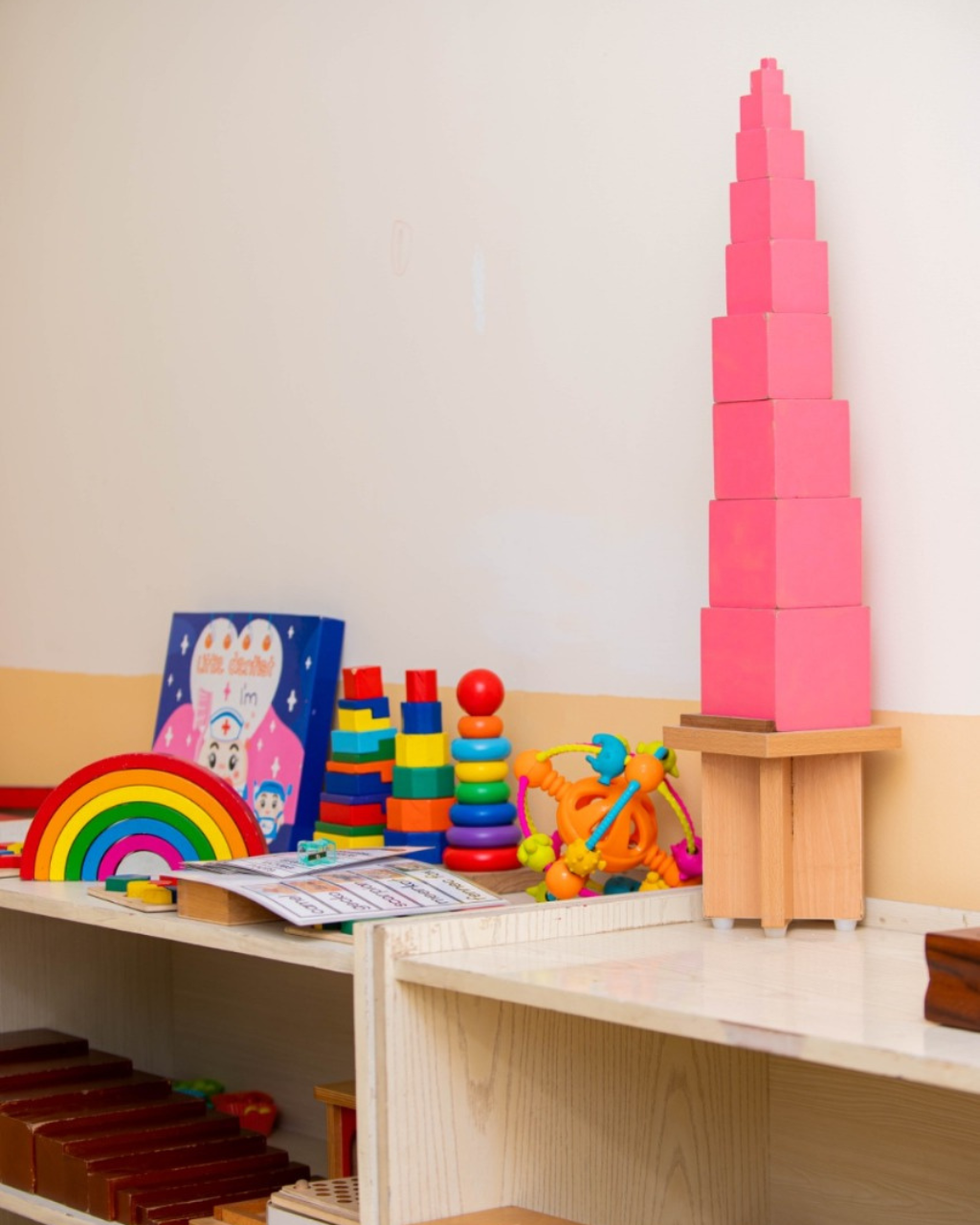
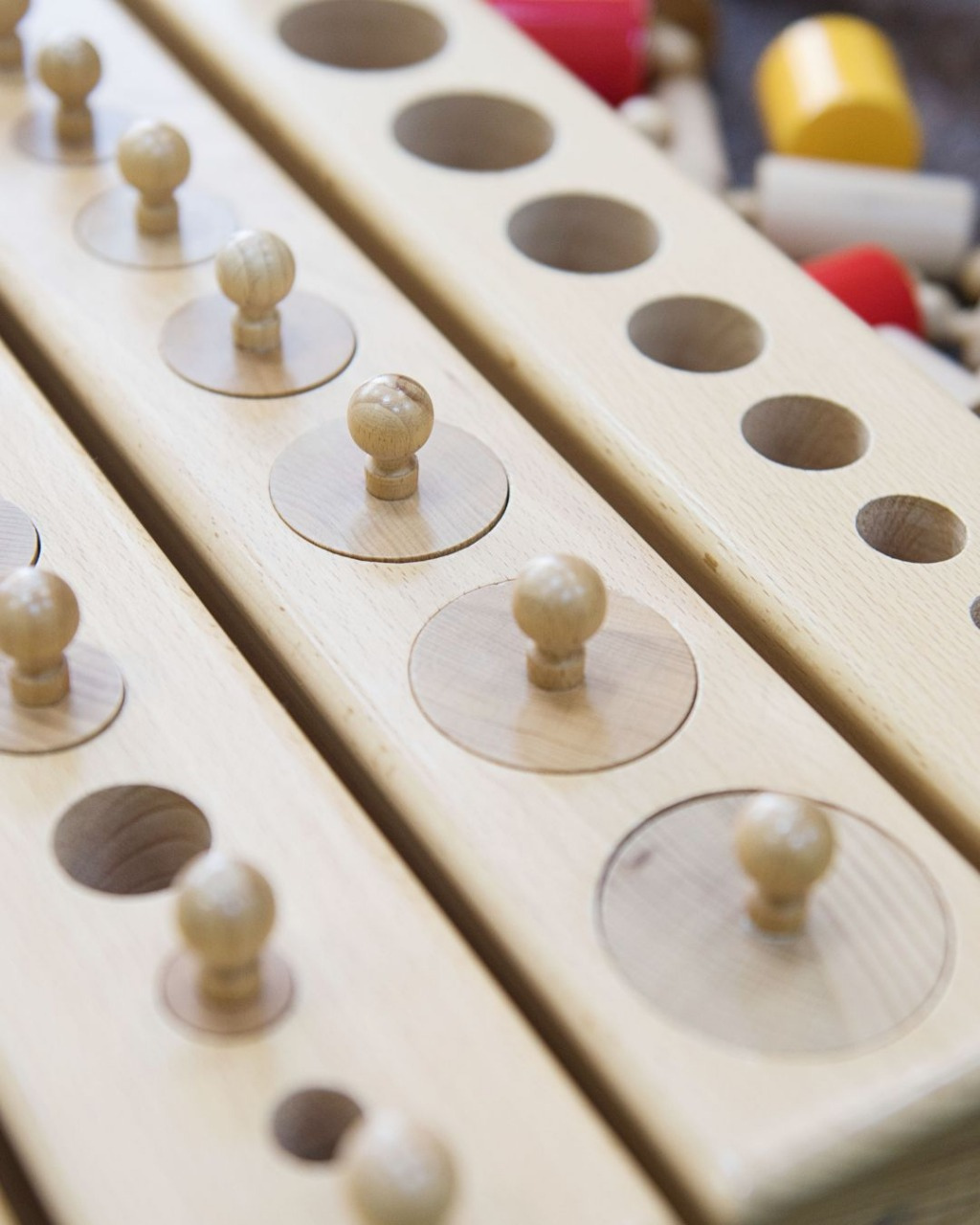
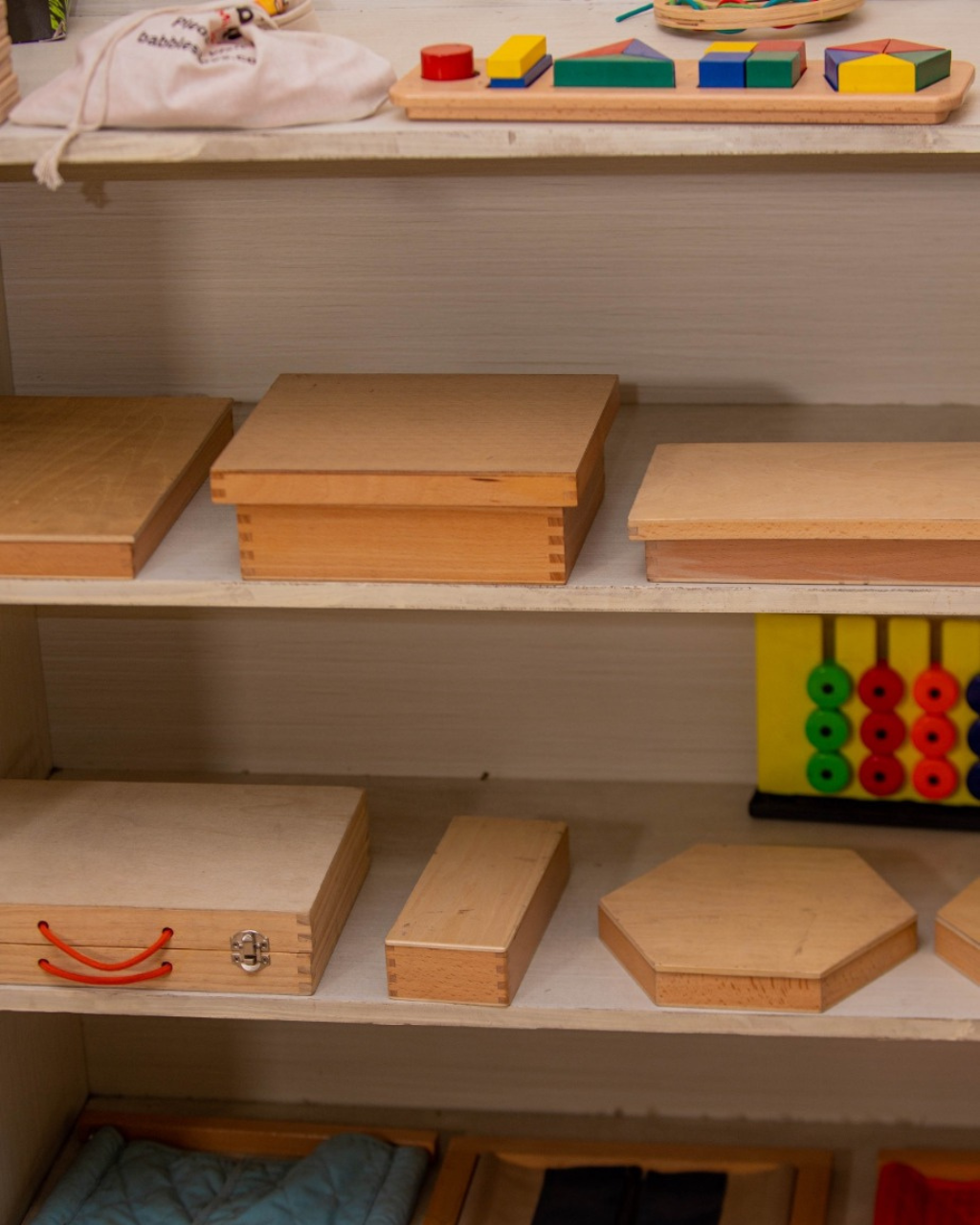
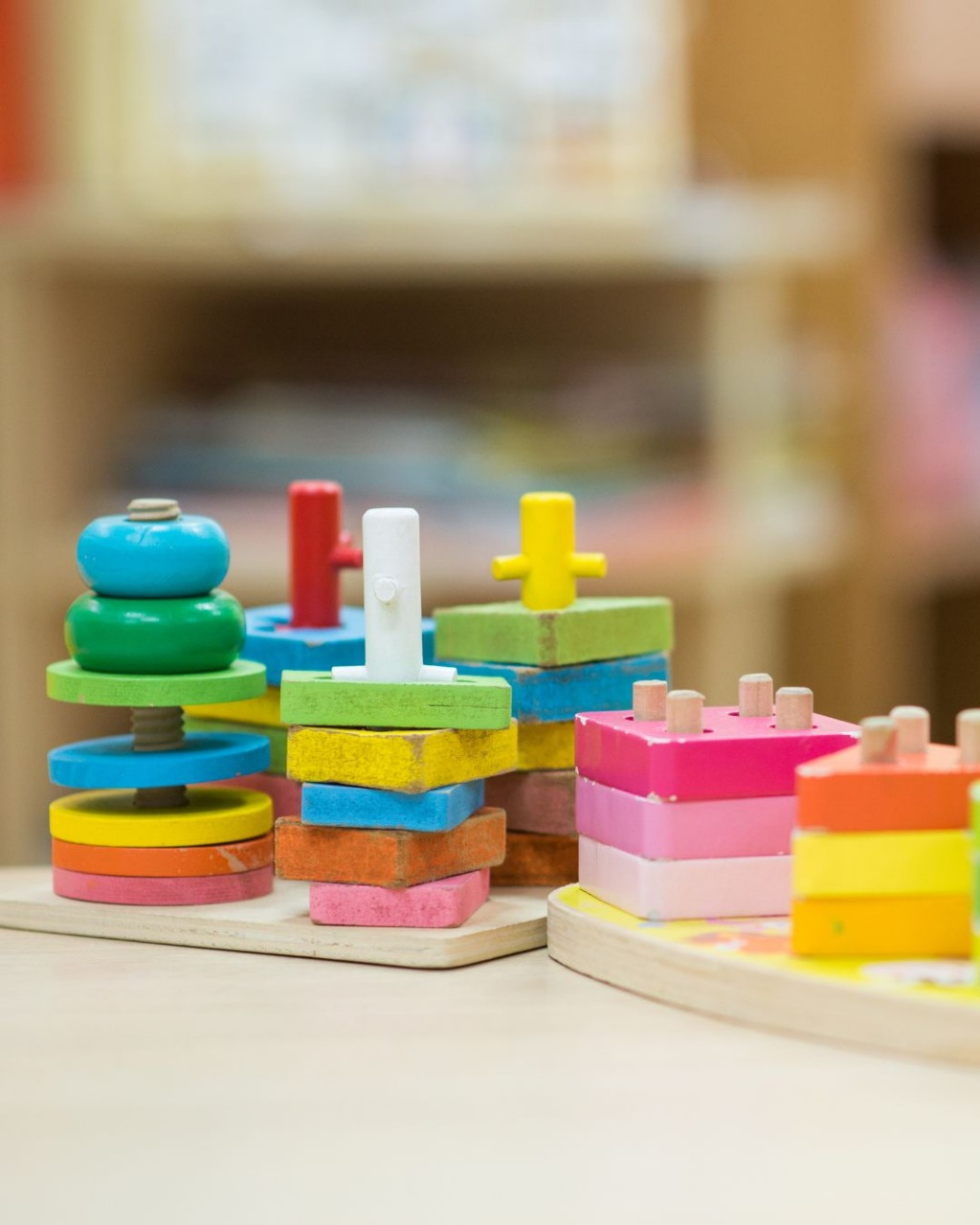
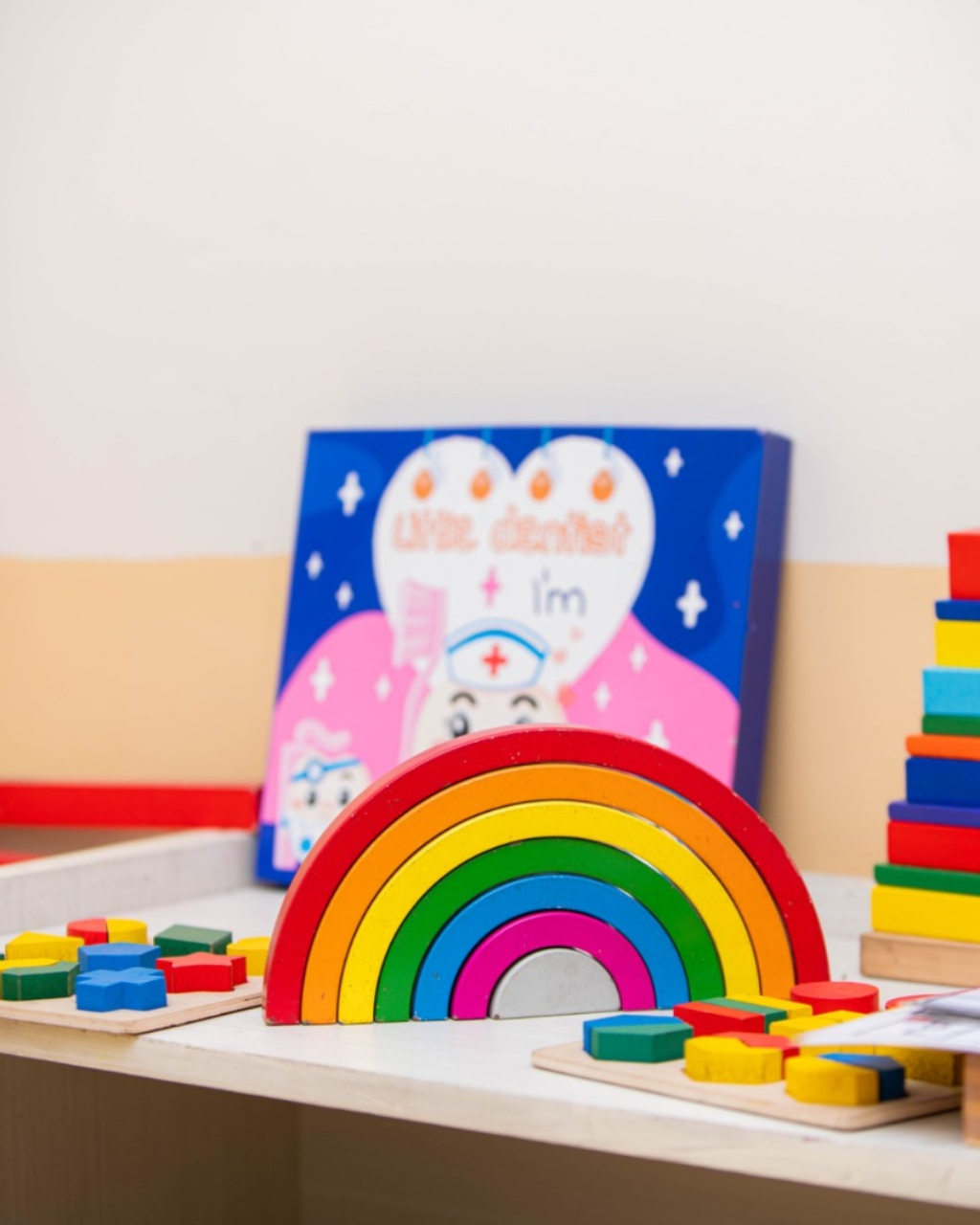
Our Montessori section offers a warm, engaging, and carefully prepared environment for children in their early years. Rooted in the globally recognized Montessori philosophy, our curriculum is designed to develop independence, concentration, and a love for learning through:
- Sensorial exploration
- Practical life activities
- Language and literacy development
- Early numeracy and mathematical thinking
- Nature and cultural studies
- Grace, courtesy, and emotional regulation
Each child works at their own pace with thoughtfully curated Montessori materials under the guidance of trained educators who respect each learner’s individual rhythm and interests. This foundation lays the groundwork for success in our Primary Years Programme and beyond.

Primary Years Programme
As a candidate school for the IB Primary Years Programme (PYP), our Grades 1–5 curriculum is centered around inquiry, conceptual understanding, and transdisciplinary learning.
The PYP encourages students to become active, caring, lifelong learners who demonstrate respect for themselves, others, and the world around them. Our classrooms are places of dynamic engagement, where students explore real-world questions, connect learning across subjects, and are empowered to take meaningful action within and beyond the school community.
The IB PYP is organized around six transdisciplinary themes that guide learning across subject areas and provide meaningful global contexts:
1. Who We Are – An inquiry into the nature of the self, beliefs and values, relationships, and what it means to be human.
2. Where We Are in Place and Time – An inquiry into orientation in place and time, personal histories, and the interconnectedness of individuals and civilizations.
3. How We Express Ourselves – An inquiry into how we discover and express ideas, feelings, nature, culture, beliefs, and values through various forms of communication.
4. How the World Works – An investigation into the natural world, its laws, and the impact of human actions on it, exploring scientific principles and cause-and-effect.
5. How We Organize Ourselves – An inquiry into human-made systems and communities, the structure and function of organizations, and decision-making.
6. Sharing the Planet – An inquiry into rights and responsibilities, access to resources, and peace and conflict resolution.
These themes provide a coherent structure across subject areas and encourage students to explore learning in a meaningful, connected way.
• Language
• Mathematics
• Science
• Social studies
• Arts
• Personal, Social and Physical Education (PSPE)
Subjects are not taught in isolation but are integrated through Units of Inquiry based on the transdisciplinary themes.
At Casa D’éducation, we believe that knowing how to learn is just as important as what is learned. That’s why the Approaches to Learning (ATL) skills are a vital part of our IB Primary Years Programme.
These skills are intentionally developed across all learning experiences, helping students become self-directed, reflective, and confident learners—both in and beyond the classroom.
The five ATL skill categories are:
• Thinking Skills – Encouraging creativity, analysis, evaluation, and problem-solving
• Communication Skills – Developing effective listening, speaking, reading, writing, and presenting
• Research Skills – Building the ability to formulate questions, gather and evaluate information, and synthesize findings
• Self-Management Skills – Cultivating time management, organization, resilience, and emotional regulation
• Social Skills – Fostering collaboration, empathy, respectful interaction, and leadership
Teachers at Casa D’éducation collaboratively plan for both implicit and explicit opportunities to develop these skills across the curriculum. Whether students are presenting a group project, reflecting on their learning journal, or managing their role in a classroom task, ATL skills are woven into daily practice.
At the heart of the IB is the learner profile—ten attributes that develop internationally minded individuals who are prepared to contribute to a better, more peaceful world:
• Inquirers
We nurture curiosity by asking questions and exploring ideas, developing a love for learning that lasts a lifetime.
• Knowledgeable
We build understanding across subjects and engage deeply with ideas that matter locally and globally.
• Thinkers
We use critical and creative thinking to solve problems and make ethical, thoughtful decisions.
• Communicators
We express ourselves confidently in many ways and actively listen to others with empathy and openness.
• Principled
We act with honesty and integrity, take responsibility for our actions, and stand up for fairness and justice.
• Open-minded
We appreciate our own backgrounds and are open to diverse cultures, perspectives, and ways of thinking.
• Caring
We show kindness and compassion and take action to make a positive difference in the lives of others.
• Risk-takers
We face new challenges with courage, explore unfamiliar ideas, and adapt to change with resilience.
• Balanced
We recognize the need to balance our intellectual, physical, and emotional well-being to live healthy, fulfilling lives.
• Reflective
We think deeply about our learning and experiences to understand our strengths and areas for growth.
We actively cultivate these attributes through daily routines, classroom interactions, community engagement, and reflection, helping students grow not just as learners, but as compassionate, ethical individuals.
Programme of Inquiry (POI)
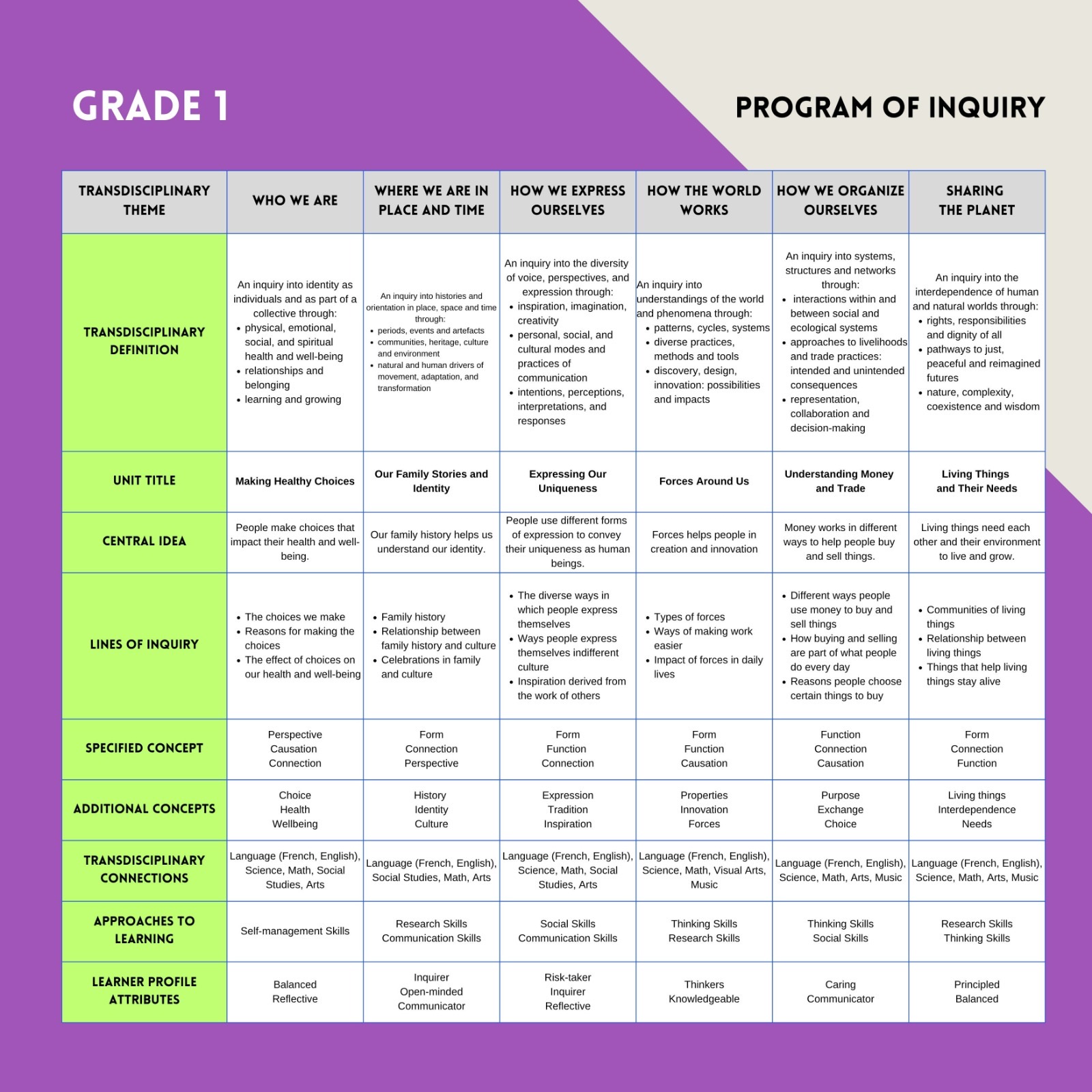
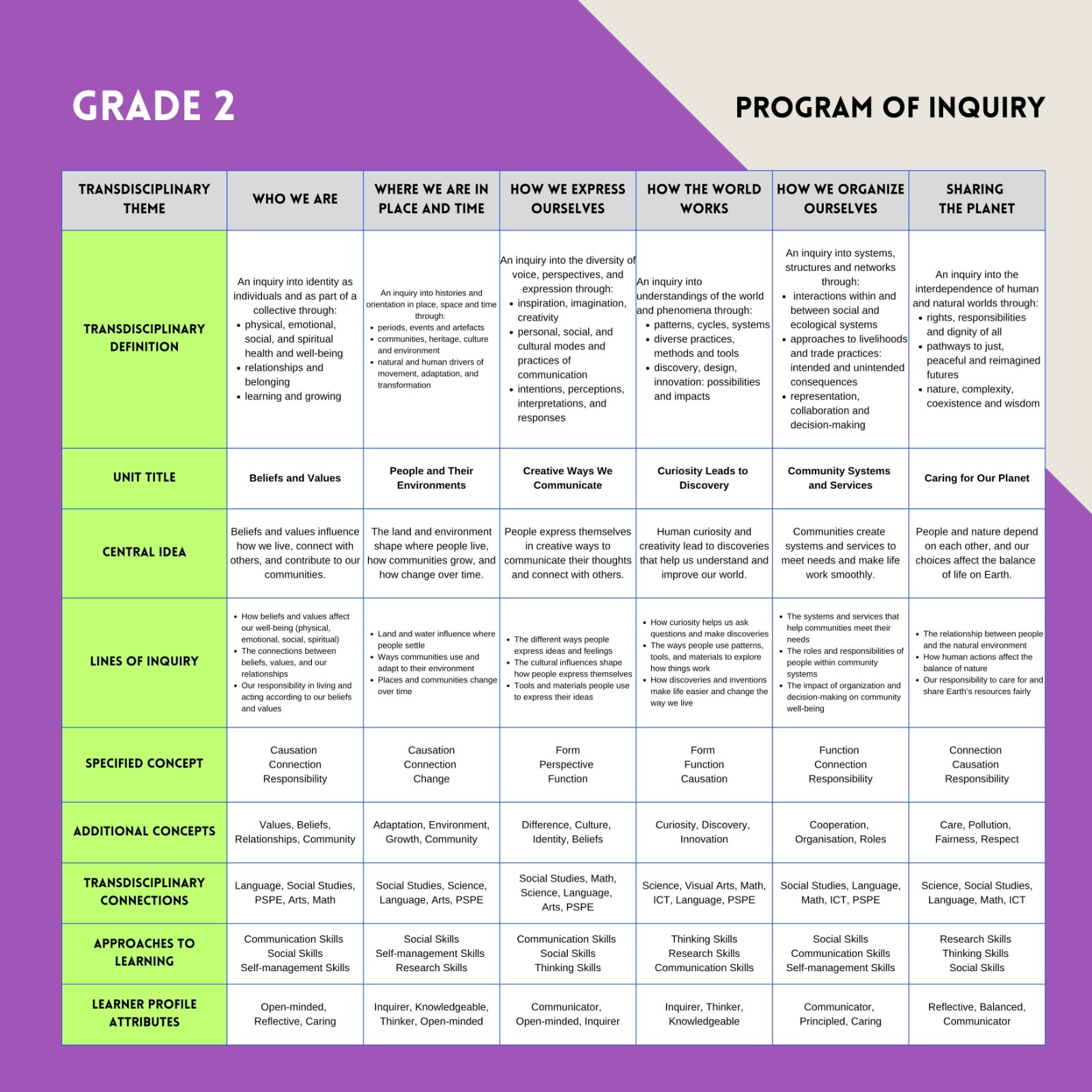
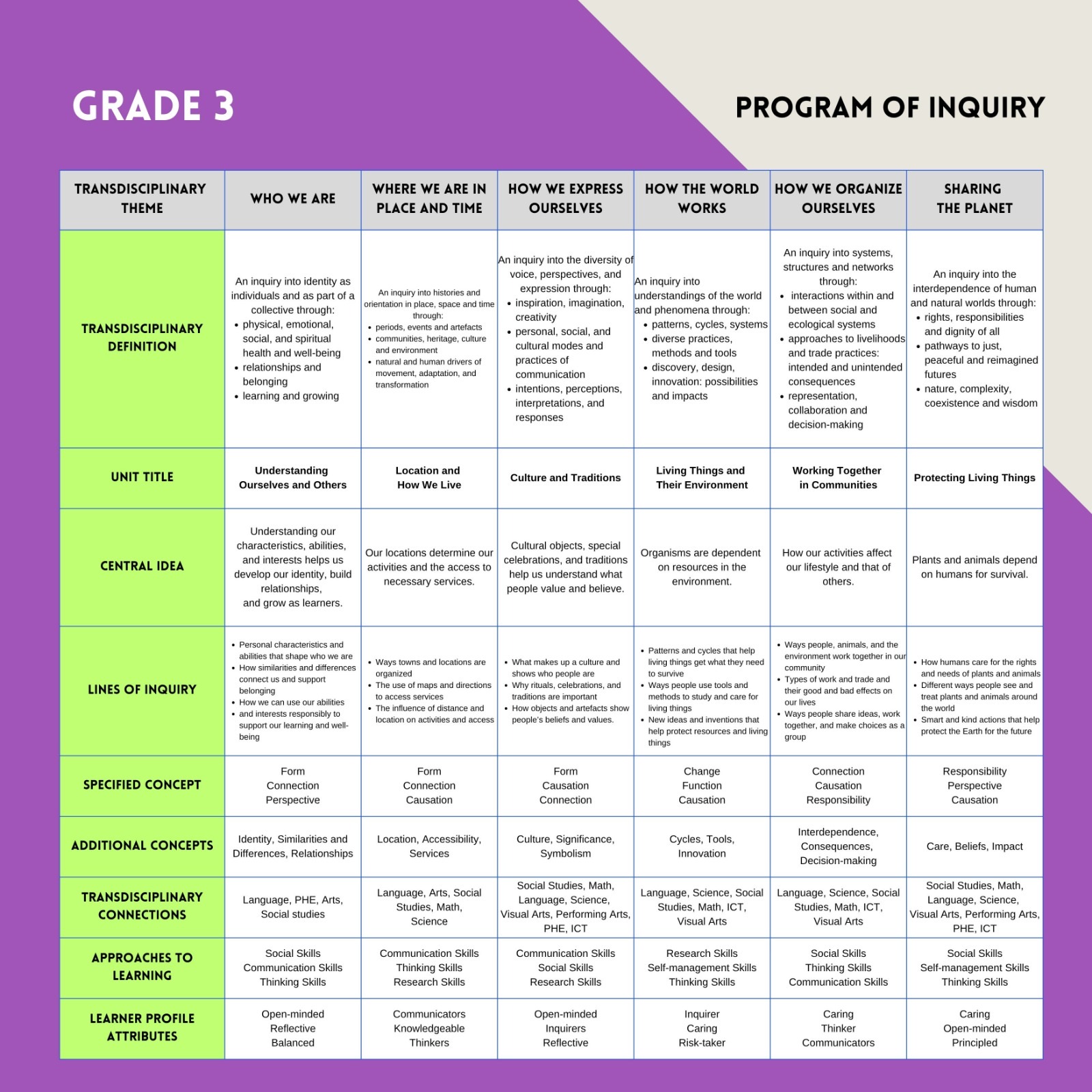
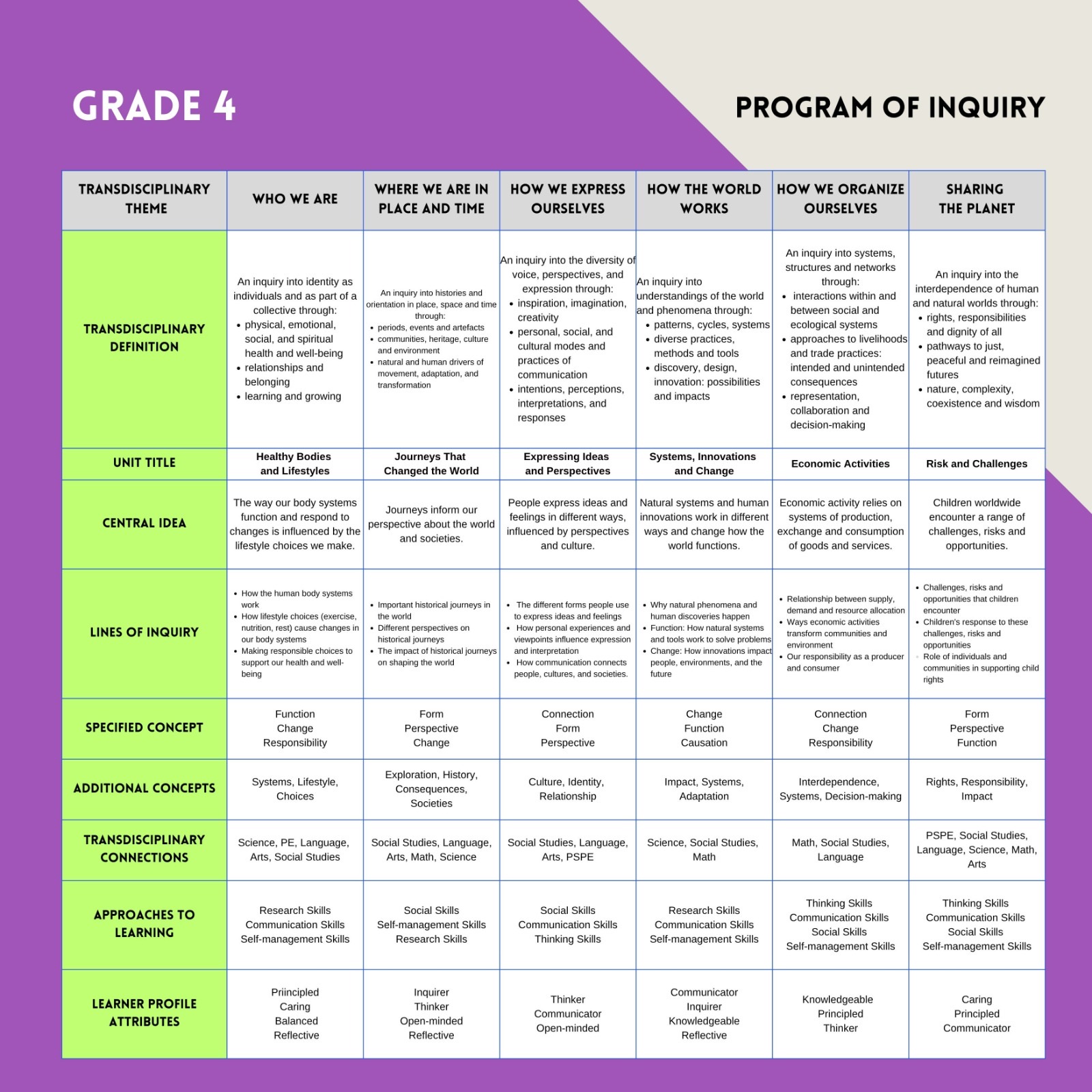
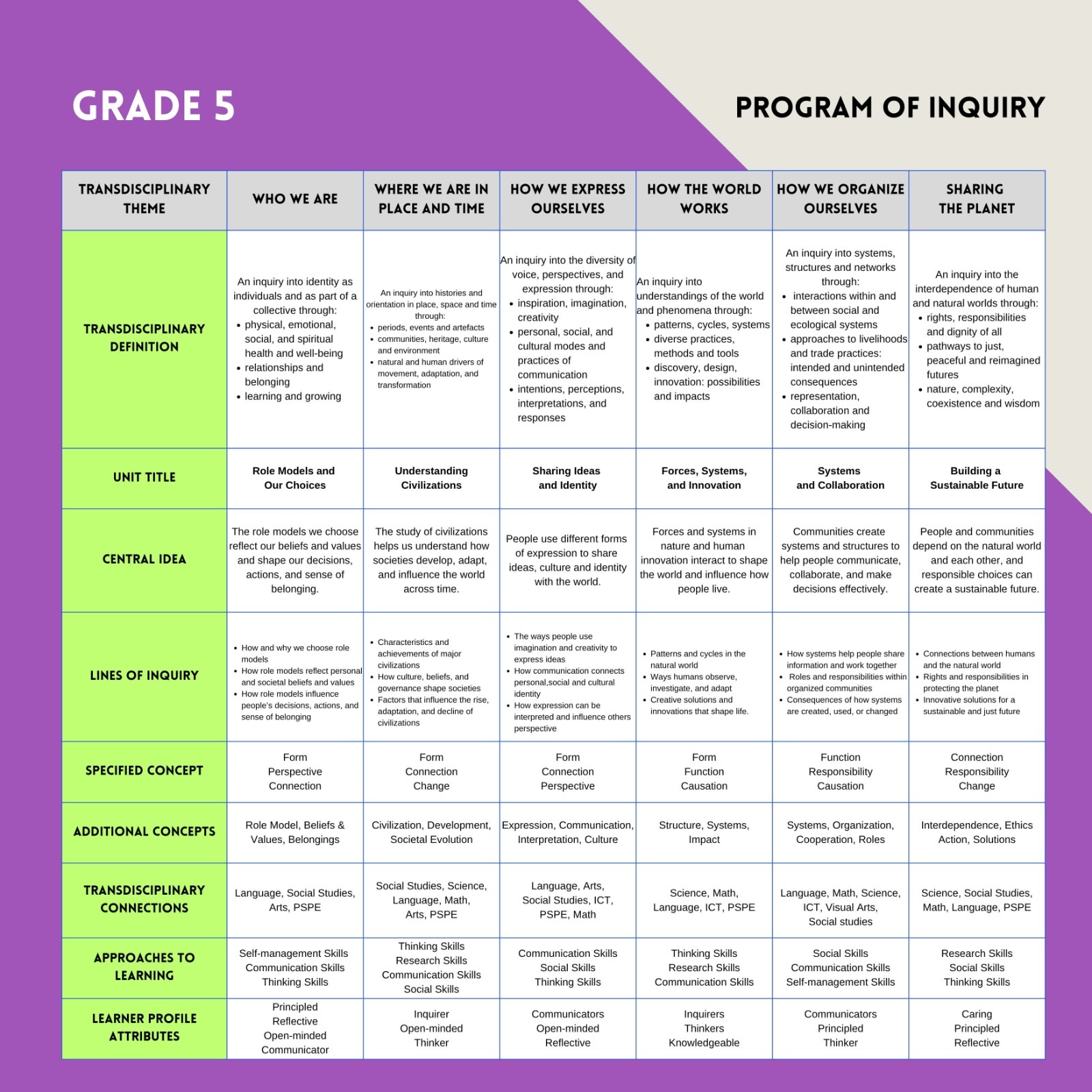
- Six Transdisciplinary Themes, such as "Who We Are" and "How the World Works"
- Key Subject Areas: Language, Mathematics, Unit of Inquiry, Arts, and Physical Education
- Approaches to Learning (ATL): Thinking, Communication, Self-Management, Research, and Social Skills
- Learner Profile Attributes: Inquirers, Thinkers, Communicators, Risk-takers, and more